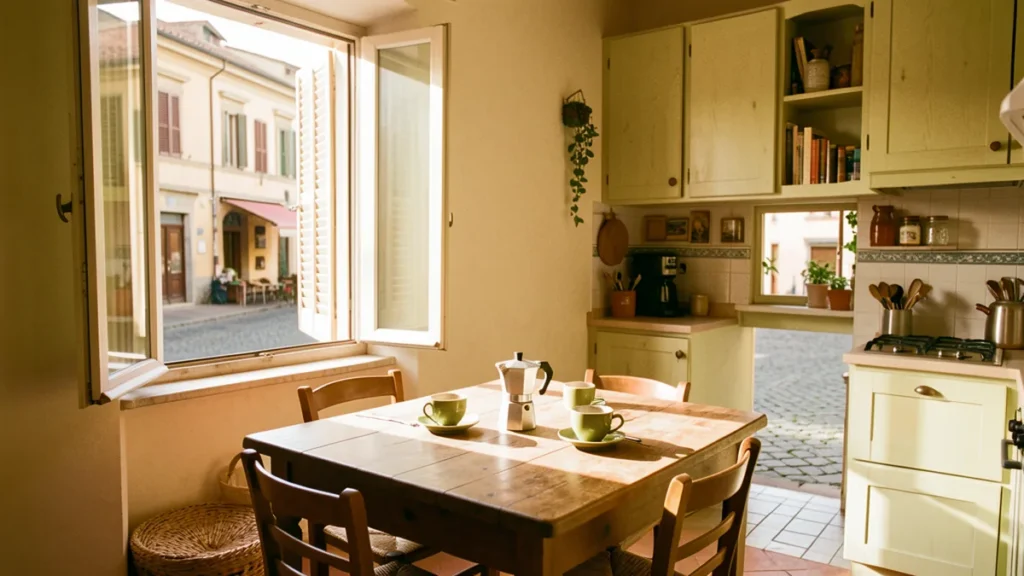
Sharing a home in Italy can lower individual housing costs, but informal arrangements often obscure who owes what. A written household budget helps keep rent, utilities and shared purchases separate.
Agree on the shared objective
For a shared home in Italy, begin with a conversation about what everyone is actually agreeing to fund or manage. Establish each person’s agreed share of rent and recurring bills before anyone commits on behalf of the group. A shared label does not necessarily mean shared priorities or equal financial capacity. Write down the purpose in plain language and distinguish essential items from optional additions. The aim is an arrangement that participants can understand before they are asked to contribute.
Make responsibilities visible
Clarify the dates when bills arrive versus when contributions are due, including who acts, who approves and who keeps the record. Then address move-in balances and separately recorded deposits while the group still has time to choose a different approach. A short written agreement can prevent reliance on conflicting memories, but it does not replace a provider’s contract or applicable legal responsibilities. Make sure the practical arrangement fits the actual terms whenever someone signs, pays or holds money on behalf of others.
Decide how exceptions will be handled
An equal split may feel unfair when an optional service was ordered by only one resident or a bill covers time before someone arrived. Discuss one plausible exception before it occurs: a cancellation, an unavailable participant or an unexpected extra cost. With a shared home in Italy, the important point is that the response should follow an understood rule rather than whoever happens to argue most strongly at the time. Avoid quietly changing the split after someone has already committed. If new circumstances require a different arrangement, make the change explicit and obtain agreement first.
Use a record everyone can follow
Create a shared ledger with the bill period, total, agreed split and payment status. Discuss exceptional costs before anyone purchases items on behalf of the household. Keep the record proportionate to the activity: what was agreed, the supporting amount, who has paid or acted, and what remains open. Share only the information participants need and protect unrelated personal details. Review a shared home in Italy when membership, circumstances or costs change. A short regular update is usually more useful than a complicated spreadsheet that only one person understands and nobody else can check.
When considering a shared home in Italy, keep the practical realities of a move in view. A document in another language, an unfamiliar payment schedule or a different opening time can affect a plan that looks straightforward on paper. Keep unresolved questions in a short list and ask the responsible organization directly. Use official Italian sources for requirements tied to employment, residence or tax status, and distinguish general planning ideas from advice about your own legal circumstances.
Clear records support better conversations; they do not replace the rental agreement or advice about a disputed tenancy.